
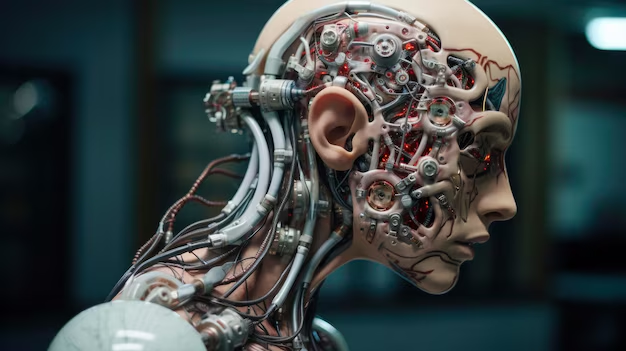
Human augmentation is no longer science fiction. Technologies like brain-computer interfaces, prosthetics, and augmented reality implants are extending human capabilities beyond biology. Companies such as Neuralink are developing neural implants that connect the human brain directly to computers, allowing people to control devices with thought alone.
Medical breakthroughs in prosthetics are giving amputees near-natural mobility, while AR contact lenses are bringing information overlays directly into the human eye. These technologies could revolutionize education, communication, and even memory enhancement.
While exciting, human augmentation raises ethical questions. Who gets access to enhancements? Will it create inequality between augmented and non-augmented humans? These are the debates shaping the future of transhumanism a future where humans evolve not just biologically but technologically.